
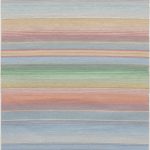
Simon Evans’ and Sarah Lannan’s exhibition, “Never Better Than Later,” references the homecoming nature of the exhibition, a munificent tribute to their feelings for San Francisco. For them only the city’s most obvious aspects are readily available to the casual visitor.
Main Content

“The Real-Life Art History of M. Louise Stanley”
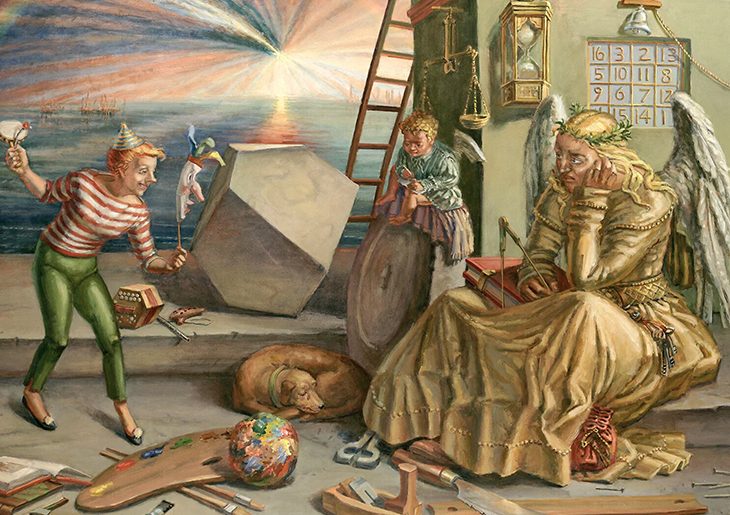
For 14 years Stanley led “Art Lovers Tours,” primarily of Italy, which includes works inspired by these experiences. “The Grand Tour” (2024) features a band of singularly unattractive, bloated, boorish American tourists who clutter an otherwise stunning equestrian fountain in a sun-drenched piazza.

Ha Chong-Hyun
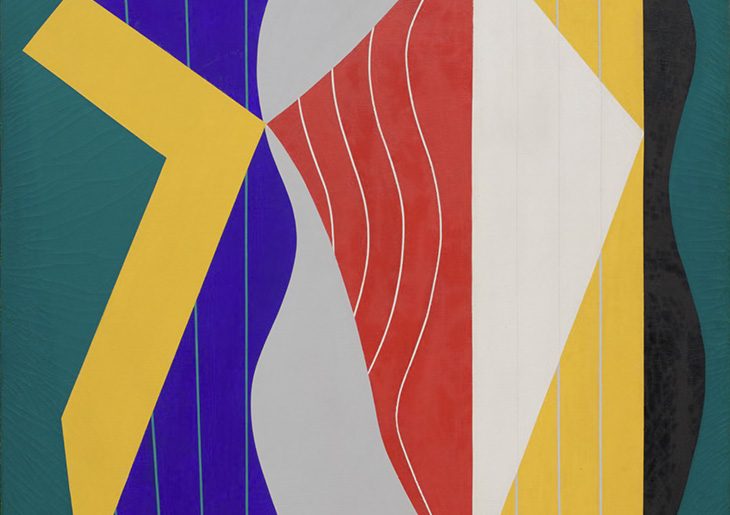
With the right kind of eyes you can see echoes of the recent history of South Korea in the five and a half decades of Ha Chong-Hyun’s work. The wrong kinds of eyes see Ha’s work as Asian recapitulations of American Minimalism and European Arte Povera.

Seyed Alavi
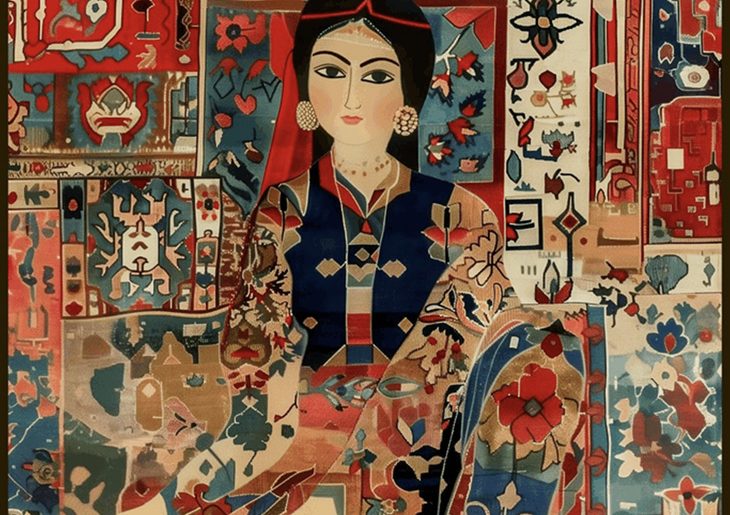
Titled “Layla and Majnun,” Seyed Alavi’s exhibitioin is based on a 12th-century love story with both Persian and Arabic origins. Its plot runs parallel to Romeo and Juliet. Majnun was a besotted poet who serenades Layla with love songs, but her father rejected him as mad and marries her off to someone else.




Dewey Crumpler
Time and distance are elastic in the work of Dewey Crumpler. Objects migrate across centuries, continents, and cultures, pointedly shedding familiar identities while acquiring new meanings. A hooded sweatshirt becomes a tulip, a cowrie shell, a vessel, or a portal into another dimension.

“The Data at Hand: Physicalizations of Earth and Space”
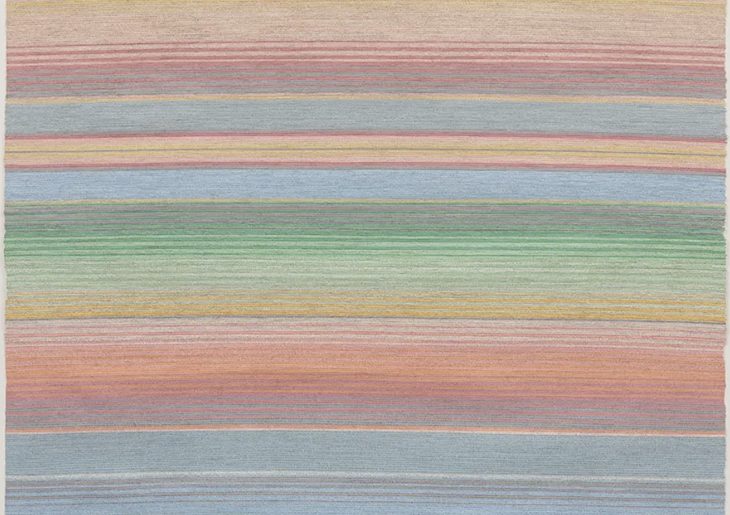
“The Data at Hand’s” subject is craft as an alternative mode of representation. Data visualization in the conventional sense is its point of departure. The exhibition is most convincing when a change of medium also changes our relation to the phenomenon itself.

Sandow Birk
Have you had it up to here with the Cheeto-in-Chief? Are you enraged by the garbage spewing from the White House? If so, head for “Sandow Birk: An Illustrated History of the Present,” a survey of the artist’s major series of multi-media works executed over the past thirty years.

Amy Hamley
For Amy Hamley, being creative is not so much the desire to do something as it is listening to that which wants to be done: the dictation of the materials. The material itself is full of suggestions for its use when approached receptively.
Mayme Kratz
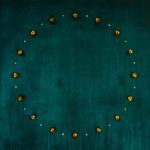
Mayme Kratz forages natural materials for her art on hikes in rugged regions of the Southwest. She collects globe chamomile and Texas laurel. The shells deposited by ancient seas show up in her work. So do the remains of insects and bones of animals, ranging from fish to bobcats and deer.

Wolfgang Paalen and Alice Rahon
Wolfgang Paalen & Alice Rahon, “Worlds Gone and to Come” is the first dedicated two-person exhibition of the couple’s work. It brings together two individuals whose lives and artistic paths were deeply intertwined, even as each developed a distinctive Surrealist vision.